

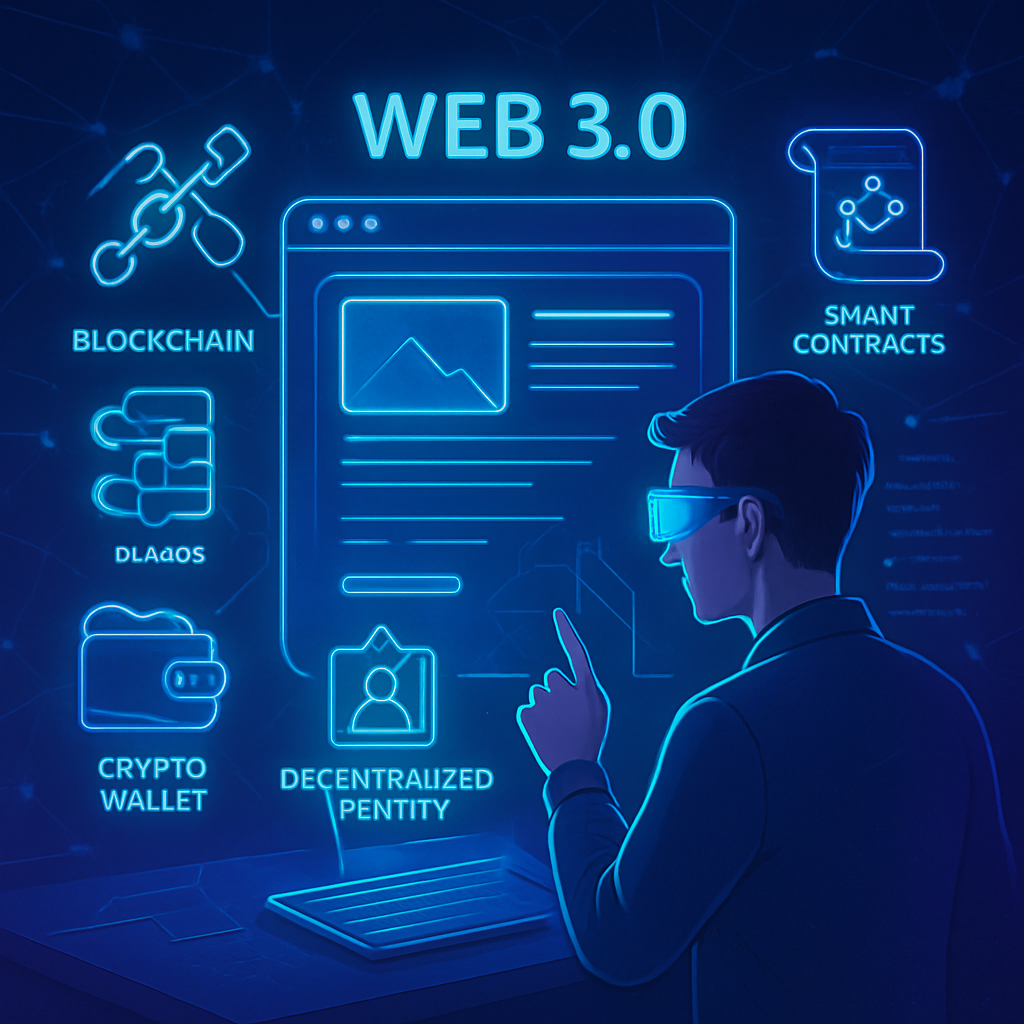
How Web 3.0 Is Reshaping Website Development
Welcome to the future of the internet! If you've been hearing the buzz around Web 3.0, you're not alone. From tech blogs to investor meetings, the next generation of the web is making waves, and it's not just hype.
Web 3.0 is changing how we build, manage, and experience websites. Whether you're a business owner considering your next digital move or a developer trying to keep up, understanding how Web 3.0 is reshaping website development is no longer optional; it's essential.
Let’s break it all down and explore how these innovations are impacting everything from backend architecture to front-end user experience within the realm of website design and development services.
What Exactly Is Web 3.0?
Let’s start simple. Web 1.0 gave us static pages, think of it as reading a book online. Web 2.0 brought interactivity, social media, user-generated content, and e-commerce. Now, Web 3.0 aims to return control to users. It's a decentralized internet powered by blockchain, smart contracts, AI, and semantic technologies. The goal? Transparency, trust, and user empowerment. And this shift is huge. According to a report by Passive Secrets, the Web 3.0 market is expected to grow from $2.18 billion in 2023 to a whopping $65.78 billion by 2032. That’s not evolution, that’s a revolution.Key Features of Web 3.0
Web 3.0 brings several groundbreaking features that are already beginning to reshape how website design and development services operate. Let’s dive into the most transformative ones.Decentralized Hosting and Blockchain Integration
Say goodbye to central servers. Web 3.0 leverages peer-to-peer hosting through systems like IPFS (InterPlanetary File System). This makes websites more secure, censorship-resistant, and reliable. Developers now build decentralized applications (DApps) that run on blockchain protocols like Ethereum or Solana. This isn’t just backend wizardry, it’s a foundational shift. Why it matters: Traditional hosting can go down or get hacked. Blockchain ensures your data stays up and untampered with.Smart Contracts for Automation
Think of smart contracts as self-executing scripts. Want to release a feature only after a payment is confirmed? The contract handles it. Need recurring subscriptions tied to token ownership? Done automatically. For anyone running a service platform, marketplace, or SaaS product, this unlocks huge efficiency and transparency. Even for a design and development company, integrating these contracts can streamline operations and client deliverables.AI-Driven User Experience
Web 3.0 sites don’t just “display” info, they understand it. Thanks to Artificial Intelligence and Machine Learning, sites can adapt in real time to user behavior. Imagine a blog that recommends topics you’re more likely to care about, or an e-commerce site that adjusts product options based on your browsing patterns. Stat Alert: Research shows that AI in Web 3.0 UX can improve conversion rates by up to 30%, as per Soocial.Improved SEO with Semantic Search
SEO isn't just about keywords anymore. Semantic search allows search engines to understand context, not just phrases. Web 3.0 incorporates technologies like RDF (Resource Description Framework) and OWL (Web Ontology Language) to create meaning-rich metadata. So if your site mentions “Apple,” it knows whether you’re talking about fruit or the tech brand. For companies providing website design and development services, mastering semantic SEO is becoming just as important as design and speed optimization.Decentralized Identity Management
Web 3.0 empowers users with self-sovereign identities (SSIs). Instead of using email/password combinations stored on someone else’s server, users own their identity through blockchain credentials. No more logins with “Login with Facebook” that track your every move. Platforms like Solid, initiated by Tim Berners-Lee (the inventor of the web!), are building decentralized identity ecosystems where users fully control their data.Integration of Cryptocurrencies and NFTs
Web 3.0 and crypto go hand-in-hand. Now, users can buy, sell, or earn cryptocurrencies directly on a website, thanks to blockchain payment gateways. Likewise, NFTs (non-fungible tokens) are being used for everything from exclusive content to access control. If you’re a creator or a marketplace platform, this is an entirely new monetization layer. A forward-thinking design and development company now offers token integration as part of modern site builds.How Web 3.0 Is Changing Website Development
Let’s connect the dots: What does all this mean for the actual process of building a website?- New Tech Stack: Developers now integrate wallets, smart contracts, and blockchain SDKs.
- UI/UX Overhaul: Sites need to support crypto transactions, decentralized login, and AI-driven personalization.
- SEO Practices Shift: Semantic structuring becomes mandatory.
- Increased Transparency: Backend code, including smart contracts, is often visible and auditable.