

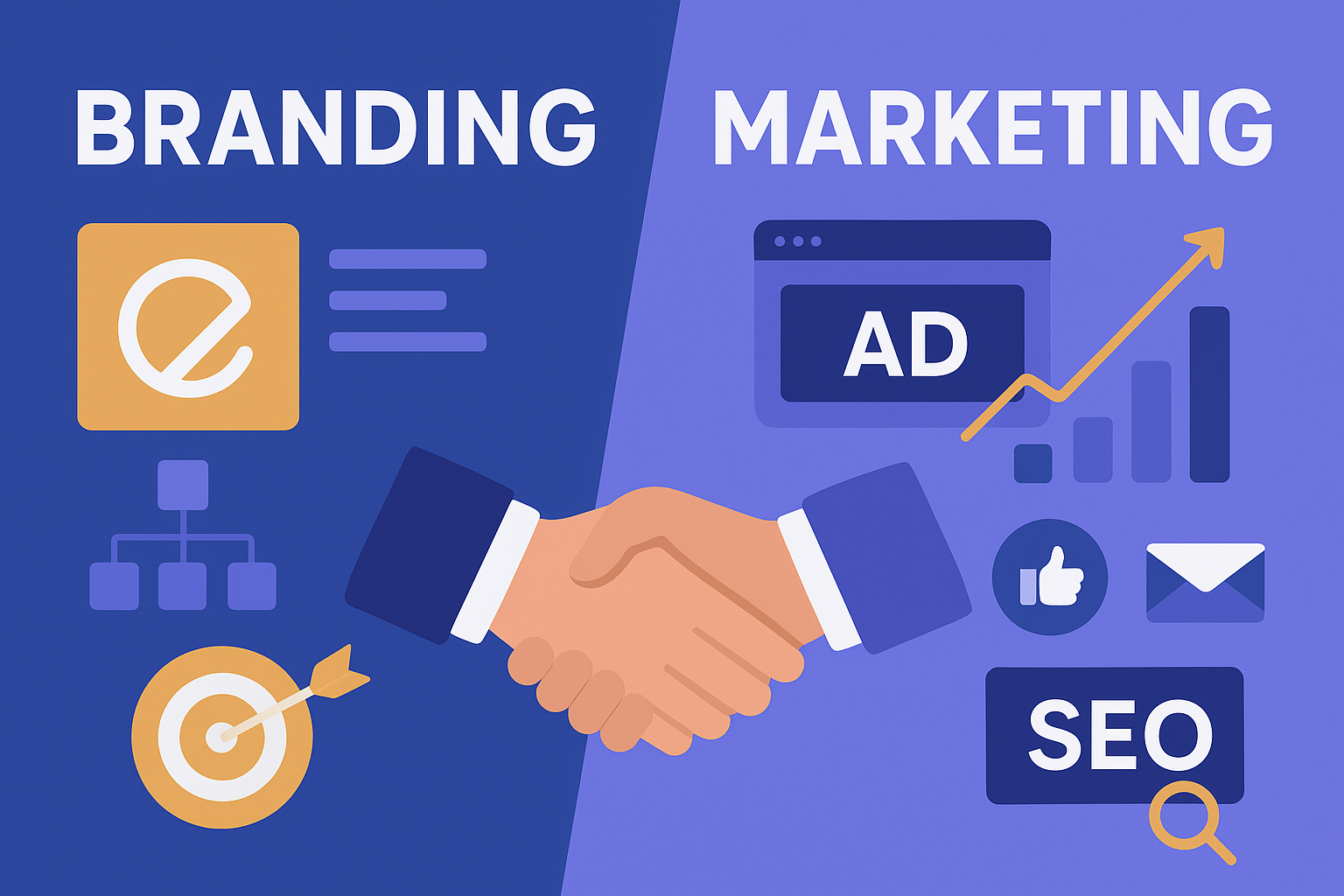
Branding vs. Marketing – Key Differences and How They Work Together
Branding and marketing are often used interchangeably, but they play very different roles in shaping how a business grows, connects with customers, and stands out in a competitive landscape. While branding defines who you are, marketing communicates what you offer and why it matters. Businesses that partner with experienced content marketing agencies often find it easier to align both and achieve long-term results.
This blog breaks down the core differences between branding and marketing, how they complement one another, the role of content, and the pitfalls to avoid.
What Is the Difference Between Branding and Marketing?
Branding is the foundation of your identity. It includes your mission, values, voice, personality, and the emotional perception customers form around your business. Branding creates recognition and loyalty; it’s what makes your audience choose you even when alternatives exist. Marketing refers to the actions taken to promote products or services. It involves strategies such as social media campaigns, ads, SEO, content marketing, email marketing, and promotional offers. Marketing is more dynamic and campaign-driven, while branding is stable and long-term. A strong brand gives marketing its direction. Marketing channels like SEO, content, and paid advertising become more effective when they are backed by a consistent brand message created by a skilled branding and marketing agency.Why Branding Is Important for Long-Term Success
Branding builds reputation and emotional connection, elements that directly influence trust and repeat purchases. Without branding, marketing messages may attract attention but fail to convert loyal customers. Here’s why branding matters long-term:1. Customer Loyalty and Trust
A consistent brand experience helps customers feel familiar with your business. Studies show that more than 80% of consumers prefer to buy from brands they trust.2. Competitive Differentiation
Branding helps your business stand out in crowded markets. Messaging, design, and values become unique identifiers.3. Higher Perceived Value
Customers are willing to pay more for branded products because branding signals quality and reliability.4. Direction for Marketing and Content Creation
Marketing strategies become clearer and more targeted when guided by a strong brand identity.The Role of Marketing in Driving Engagement and Conversions
If branding is the “why,” then marketing is the “how.” It takes the brand’s identity and communicates it through channels that engage, attract, and convert. Marketing drives:- Awareness: Reaching new audiences through SEO, ads, and social content.
- Engagement: Building relationships through meaningful, helpful posts and resources.
- Conversions: Turning interest into sales through targeted campaigns, landing pages, and optimized messaging.
Branding and Marketing Strategy: How They Work Together
Branding and marketing are two aspects of the same concept. Here’s how they complement each other:1. Branding Shapes Marketing Messaging
Your unique selling points, tone of voice, colors, and brand promise all guide marketing strategies.2. Marketing Amplifies Your Brand Story
Through email campaigns, ads, social posts, or blogs, marketing brings your brand identity to life.3. Branding Ensures Consistency Across All Touchpoints
Whether someone sees your website, an Instagram post, or a video ad, the brand should feel unified.4. Marketing Provides Data for Brand Improvements
Analytics from campaigns help brands refine their positioning, messaging, and audience targeting. When companies work with a unified branding and marketing agency, the synergy between these two elements becomes even more powerful.Common Mistakes: When Branding and Marketing Are Misaligned
Even strong companies sometimes fall into misalignment. Here are common pitfalls:- Conflicting Messaging: If branding says “premium and professional,” but marketing promotes constant discounts, customers become confused.
- Lack of Consistency: Inconsistent colors, fonts, tone, and values weaken brand recognition.
- Overemphasis on Short-Term Marketing: Focusing only on conversions without nurturing brand loyalty can hurt long-term success.
- Weak Brand Foundation: Marketing fails when the brand identity is unclear, outdated, or poorly defined.
The Interplay of Branding and SEO
Branding and SEO work together more closely than most businesses realize.- SEO amplifies branded searches, which occur when customers type your business name into Google.
- Strong branding increases click-through rates, a key SEO ranking factor.
- Consistent messaging improves dwell time, helping your rankings grow.
- Working with the Best SEO service ensures your brand voice remains strong across search-optimized pages.
The Role of Content Marketing in Bridging Branding and Marketing
Content marketing is the bridge between brand storytelling and marketing execution. High-quality content:- Communicates Your Brand Voice: Blogs, videos, articles, and guides allow you to express your personality and values.
- Supports SEO Efforts: Strategic content boosts rankings and visibility.
- Educates, Engages, and Converts: Content helps move users through the awareness, consideration, and decision stages.