

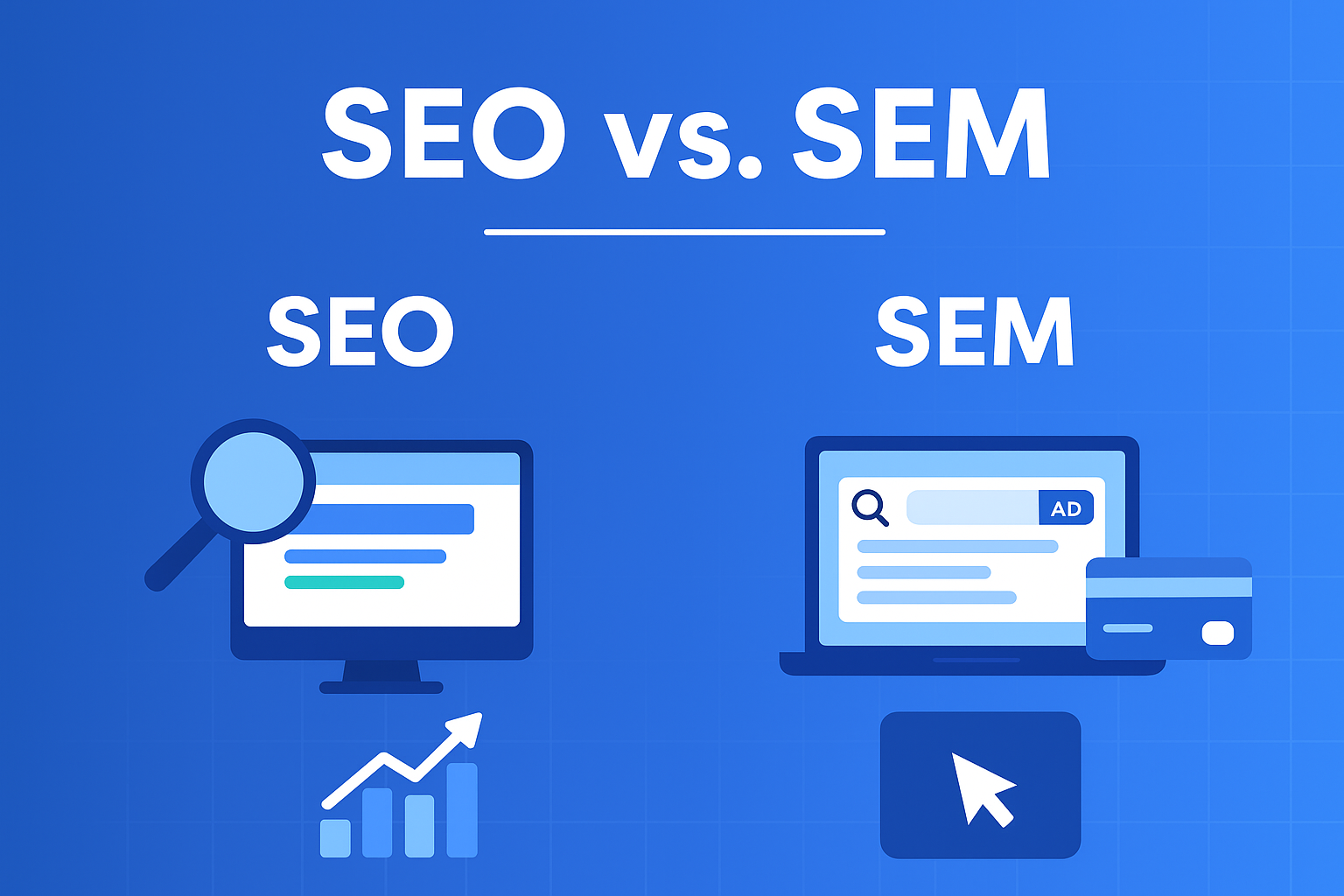
SEO vs. SEM: What Is the Difference Between SEO and SEM?
In the digital age, visibility is everything. Businesses compete intensely to rank at the top of search engine results, where clients are most likely to click. Two powerful tools make this possible: SEO (Search Engine Optimization) and SEM (Search Engine Marketing). While these terms are often used interchangeably, they represent different strategies with distinct goals, timelines, and costs. Understanding the difference between SEO and SEM is vital for businesses looking to make informed marketing decisions or hire expert SEO services and social media marketing agencies.
SEO vs. SEM: What Is the Difference?
SEO is the process of optimizing a website organically to improve its ranking on search engines like Google, Bing, or Yahoo. It involves refining content, keywords, backlinks, and technical performance to drive unpaid (organic) traffic. On the other hand, SEM is a broader term that includes SEO but focuses heavily on paid advertising, such as Google Ads or Bing Ads. SEM allows businesses to bid for ad placement in search results and drive traffic through targeted campaigns. To put it simply, SEO builds long-term organic visibility, while SEM generates instant traffic through paid promotions.SEO vs. SEM: Main Features
Let’s break down the key features that make SEO and SEM unique:SEO Features:
- Organic Growth: SEO focuses on earning traffic naturally rather than paying for clicks.
- Content Optimization: It relies on keyword research, on-page optimization, and quality backlinks.
- Sustainability: Once established, organic rankings can maintain steady traffic with minimal cost.
- Technical SEO: Factors like site speed, mobile responsiveness, and user experience play crucial roles.
SEM Features:
- Paid Advertising: SEM includes paid campaigns such as PPC (Pay-Per-Click).
- Instant Results: Ads can appear on search results immediately after launching a campaign.
- Precise Targeting: SEM allows demographic, geographic, and behavioral targeting.
- Performance Analytics: Provides measurable metrics like click-through rate (CTR) and conversion rate.
SEO vs. SEM: Understanding the Timeline for Results
The timeframe for achieving results is a major difference between SEO and SEM. SEO is a long-term strategy. Typically, it can take 3–6 months to notice substantial ranking improvements, depending on competition and content quality. However, once a website establishes authority, it continues to gain traffic without recurring costs. SEM, by contrast, offers instant visibility. As soon as an ad campaign is launched, it can appear at the top of search results. However, this visibility lasts only as long as the campaign runs and the budget supports it. Once you stop paying, the visibility ends.SEO vs. SEM: How Much Do They Cost?
Choosing between SEO and SEM largely depends on your objectives and available resources.- SEO services usually involve monthly retainers or project-based pricing. Costs range from $500 to $5,000 per month, depending on the agency and the project scale. The investment pays off over time as organic traffic grows.
- SEM, meanwhile, operates on a pay-per-click (PPC) model. Advertisers pay every time a user clicks on their ad. Depending on the industry, the average cost per click (CPC) ranges from $1 to $10, but can be significantly higher in competitive sectors such as finance or legal services.
SEO vs. SEM: Which Should You Use?
The decision between SEO and SEM depends on your business goals, budget, and timeline:- Choose SEO if you aim for long-term organic growth, brand credibility, and sustainable visibility. It’s ideal for businesses that want to build authority over time without continuous ad spend.
- Choose SEM if you need quick results, such as launching a new product, seasonal campaigns, or testing market response. It’s perfect for startups looking to generate leads fast.
Is SEO or SEM Right for You?
Determining whether SEO services or SEM are right for you starts with analyzing your marketing objectives:- For small businesses, SEO may be the most cost-effective option to grow naturally through consistent content and backlinks.
- For large enterprises, combining SEM with SEO helps capture both paid and organic audiences efficiently.
- For e-commerce brands, SEM ensures instant sales opportunities while SEO builds long-term brand awareness.