

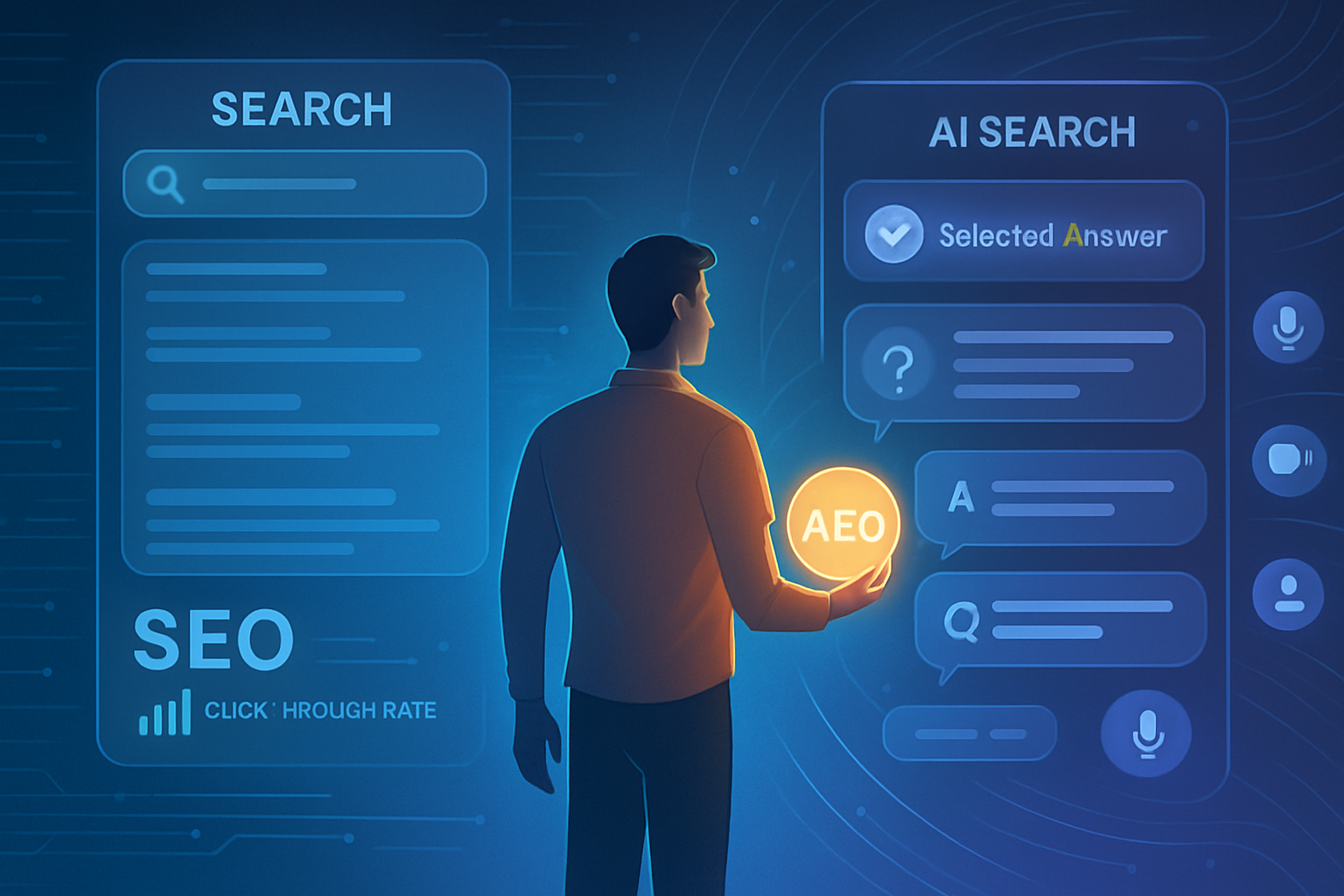
Goodbye Clicks, Hello Answers: Is AEO Replacing SEO as We Know It?
Remember the days of obsessing over keyword rankings and click-through rates? Well, buckle up, because search as we know it is getting a major upgrade. It’s time to say goodbye to the old-school clicks-and-traffic model and hello to Answer Engine Optimization (AEO).
You’ve probably noticed it already. Ask Google a question, and instead of clicking a link, you’re handed an answer right away. No extra tabs, no rabbit holes, just instant results. Whether you're Googling or using ChatGPT, you’re engaging with an answer engine, not a traditional search engine.
So, what’s behind this shift? And what does it mean for SEO, especially if you're offering services like website design and development?
Let’s break it down.
From SEO to AEO: A Technological Evolution
Search Engine Optimization (SEO) had a good run. For over two decades, marketers worked tirelessly to climb the ranks of Google using keyword strategies, backlinks, and technical tweaks. The higher you ranked, the more likely users would click your site. But then something changed. With the rise of AI, chatbots, voice assistants, and Google’s featured snippets, users started getting answers without ever clicking. In fact, a 2024 SparkToro study revealed that over 65% of searches ended without a single click. Search engines aren’t just showing links anymore; they’re giving direct answers. That’s where AEO comes in.What is AEO or Answer Engine Optimization?
So what exactly is AEO? AEO is the practice of optimizing your content to ensure that AI-powered answer engines—like ChatGPT, Google AI Overviews, Siri, Alexa, or Perplexity—recognize your site as the authoritative response to relevant queries. Here’s how it differs from traditional SEO:- Goal: SEO aims to rank webpages; AEO aims to become the answer.
- Content format: SEO emphasizes phrases and backlinks. AEO demands clear, conversational Q&A-style content.
- Technical setup: SEO relies on meta tags and backlinks; AEO prioritizes structured data (schema), headings, bullet points, and snippet-friendly formatting (Wikipedia).
- Metrics: With SEO, you track rankings, CTR, and traffic. With AEO, you track AI citations, zero-click visibility, mentions in voice assistants, and branded question visibility.
How to Optimize for AEO
You’re probably thinking: “Okay, so how do I actually do this?” Great question. Let’s walk through how to optimize your content for answer engines without abandoning your SEO roots.Answer Specific Questions Clearly
Sounds obvious, right? But too many websites still bury the answer deep in long paragraphs. With AEO, clarity is king. Let’s say someone searches: “What are the best website design and development services for small businesses?” Your content should have a direct, concise answer, maybe in the first few lines, followed by supporting details. Think like a chatbot.Use Q&A Formats and Structured Content
FAQs, bullet lists, headings that mimic spoken questions, they all help AI understand your content better. For example: Q: What are website design and development services? A: Website design and development services include the planning, creation, and maintenance of professional websites for individuals and businesses. Easy to read. Easy for AI to extract.Implement Schema Markup
Want Google or ChatGPT to understand your content at a deeper level? Use structured data like FAQPage, HowTo, and Product schema. These snippets help search engines categorize your info as answer-worthy.Keep It Conversational (Just Like This Blog)
AI engines love natural, human-sounding content. That means drop the robotic tone and write like you’re chatting with your reader. And yes, that includes when you’re talking about your website design and development services. Make them approachable, understandable, and relevant.Create Authority and Topical Clusters
AEO works best when your site is seen as an expert on a specific topic. Create multiple content pieces around a theme, like UX design, mobile optimization, and performance tuning, all linking back to your core service page. It signals depth and trustworthiness.So, Is SEO Dead?
Let’s address the elephant in the room: Is traditional SEO dying? No, but it’s definitely changing. Think of SEO as the foundation. You still need to:- Use proper headers
- Speed up your site
- Build backlinks
- Research keywords