

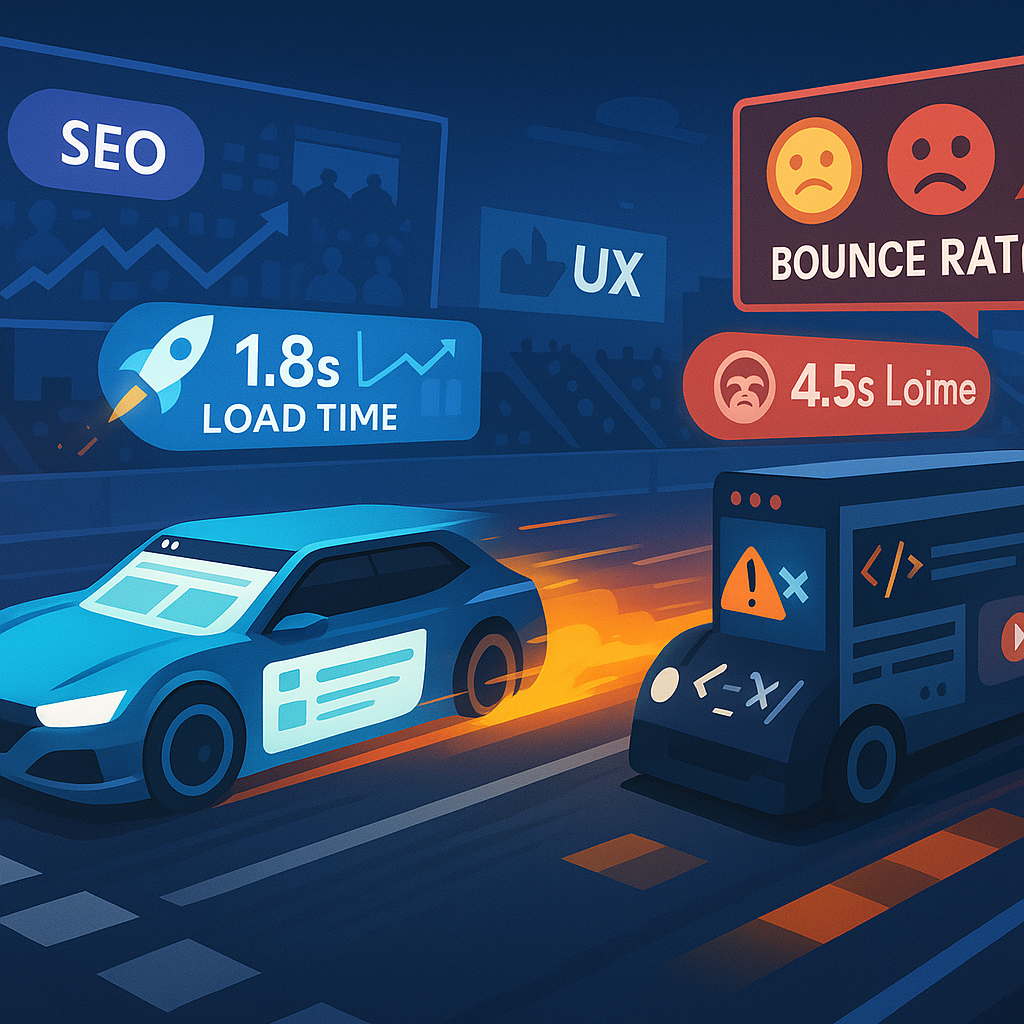
Why Website Speed Matters? | Here’s How Speed Breaker Can Impact Business Performance
In the fast-paced digital world, website speed is no longer just a technical detail—it’s a strategic pillar for any business aiming to thrive online. One-second delays can mean lost revenue, frustrated users, and dropping search engine rankings. For brands investing in website design and development services, performance should be at the heart of every decision.
This blog dives deep into the role of speed in driving online performance, backed by facts, use cases, and growth-focused strategies to sharpen your edge.
Why Website Speed Isn’t Optional Anymore
Speed dictates first impressions, user engagement, and conversion potential. In simpler terms—slow sites lose customers. Fast ones win trust, traffic, and transactions.Here’s what happens when you compromise on speed:
- More bounces: If your website takes longer than 3 seconds to load, most users will hit the back button.
- Fewer conversions: Even a 1-second delay can cause a 7% drop in conversions.
- Lower search rankings: Google favors speed. A sluggish website will struggle to compete in organic search.
What Impacts Website Speed the Most?
Several technical and content-based elements determine how fast your website loads:- Web hosting infrastructure
- Code quality and structure
- Image and video optimization
- Browser caching efficiency
- Server response time
User Experience Hinges on Performance
User experience (UX) is the silent driver behind conversions and brand loyalty. Visitors won’t wait—they’ll bounce. And they won’t come back. Speed-related UX issues include:- Frustration and broken trust
- Disruptive browsing experiences
- Increased cart abandonment in eCommerce
Search Rankings Depend on Site Speed
Google’s algorithm is laser-focused on speed. It measures performance through its Core Web Vitals:- Largest Contentful Paint (LCP)
- First Input Delay (FID)
- Cumulative Layout Shift (CLS)
Mobile Optimization: More Than Just Looks
Over half of global internet traffic comes from mobile devices. If your site isn’t fast on smartphones, you’re alienating a massive audience. To boost mobile performance:- Eliminate bulky media
- Use adaptive layouts
- Enable lazy loading for visuals
- Optimize typefaces and UI responsiveness
eCommerce and Speed: Direct Link to Sales
If you’re in eCommerce, here’s the bottom line: speed equals revenue. Speed ensures:- Lightning-fast product page views
- Smooth checkout processes
- Real-time inventory updates
Top Strategies to Accelerate Your Website
Let’s get tactical. Here’s how you can noticeably improve your site’s speed:-
Streamline Visual Assets
- Resize and compress images
- Switch to next-gen formats like WebP
- Use compression tools like TinyPNG
-
Minify Website Code
- Remove white space and unnecessary code
- Compress JavaScript, CSS, and HTML files
-
Use a Global CDN
- Content Delivery Networks ensure faster access to your site from anywhere on the map
-
Enable Smart Caching
- Store assets locally on the user’s browser for quicker repeat visits
-
Incorporate Efficient APIs
- Custom API integrations should be lightweight and fast
- Avoid over-fetching data and limit third-party requests
-
Host Smartly
- Choose cloud providers with scalable solutions and strong uptime SLAs
-
Audit, Monitor, Repeat
- Use tools like Lighthouse, GTmetrix, and PageSpeed Insights
- Identify friction points and resolve issues before users notice
Why You Need Ongoing Maintenance
Speed is never set-and-forget. As your website grows and technologies evolve, performance must be continuously optimized. Partnering with a design and development company that provides ongoing maintenance gives you:- Real-time uptime monitoring
- Swift updates and patch rollouts
- Hands-on resolution of plugin and script conflicts